

What Is Form 1099‑K?
Form 1099‑K is issued by payment processors (PayPal, Venmo, Cash App, eBay, Etsy, etc.) to report transactions for goods and services. It helps the IRS track income from online platforms and gig work.
The Big Change in Tax Season 2026
In the previous tax season, the IRS had planned to enforce a $600 reporting threshold (meaning anyone earning $600 or more through payment apps would receive a 1099‑K). This caused widespread concern among gig workers and casual sellers. However, in tax season 2026, the One Big Beautiful Bill Act (OBBBA) reversed that rule. The threshold reverted to the previous standard: $20,000 in payments AND 200 transactions per year.
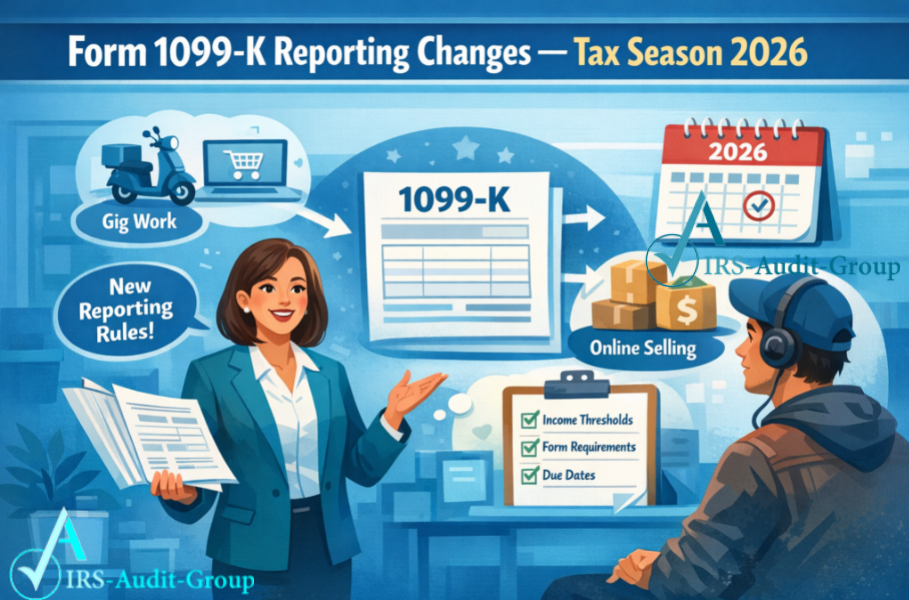
Comparison: Tax Season 2026 vs. 2025
| Tax Season | Reporting Threshold | Who Receives 1099‑K | Key Impact |
| 2025 | Planned $600 (single transaction or more) | High‑volume sellers, established gig workers, and marketplace businesses | Would have dramatically expanded reporting, creating confusion and paperwork |
| 2026 | $20,000 AND 200 transactions | High‑volume sellers, established gig workers, marketplace businesses | Limits reporting to more professional sellers; casual users spared |
Why the Change?
Lawmakers and the IRS faced backlash over the $600 threshold, which would have flooded taxpayers with forms for small, casual transactions (like selling used furniture or splitting dinner bills). The tax season 2026 revision aims to balance compliance with practicality.
What Hasn’t Changed?
- Personal Transfers: Payments between friends/family (gifts, reimbursements) are not taxable income.
- Income Reporting: Taxpayers must still report all taxable income, even if they don’t receive a 1099‑K.
- Deadline: Payment apps must issue 1099‑K forms to taxpayers and the IRS by January 31, 2026.
Who Is Affected in Tax Season 2026?
- Gig Workers: Freelancers using apps like Upwork, Fiverr, or PayPal for client payments.
- Online Sellers: Individuals selling on eBay, Etsy, Amazon Marketplace, or Facebook Marketplace.
- High‑Volume Resellers: Those exceeding $20,000 in sales and 200 transactions.
Casual sellers (e.g., selling a few personal items online) are no longer burdened with 1099‑K forms unless they cross the threshold.
What does this Matters to You for Tax Season 2026?
A common misconception is that if you don’t receive a 1099-K, the money is “tax-free.” This is incorrect.
- The IRS considers all income taxable, whether it is reported on a form or not.
- Even without a 1099-K, you are legally required to report your gig earnings on Schedule C or Schedule 1.
- The OBBBA only changed the reporting requirement for platforms like PayPal and Venmo; it did not change the taxability of the income.
Practical Guidance for Taxpayers
- Track Income Independently: Even if you don’t receive a 1099‑K, you must report taxable income.
- Separate Personal & Business Accounts: Helps avoid confusion between taxable and non‑taxable transfers.
- Stay Updated: IRS FAQs on Form 1099‑K are updated regularly; check for clarifications.
Tax Season 2026 rollback of the $600 threshold means fewer unnecessary forms and a return to the more manageable $20,000/200 transaction standard. Still, gig workers and online sellers should remember that thresholds don’t eliminate income reporting requirements. Staying informed, organized, and proactive is the best way to navigate these changes.
Why IRS Audit Group Matters
For businesses and individuals preparing for Tax Season 2026, partnering with a firm like IRS Audit Group means you’re not just filing forms — you’re building a defense strategy. Their CPAs specialize in audit prevention, compliance, and representation, ensuring peace of mind in a complex tax environment.
IRS Audit Group consists of tax professionals, CPAs, enrolled agents, and tax attorneys. We are located in Los Angeles, California, however, our certified professionals cooperate and work with all IRS offices nationwide. Please get in touch with us for more information.
Telephone Number: (310) 498-7508